How To Quickly Assess Your Financial Wellness

As you’ve probably noticed, financial wellness is all the rage. According to one survey, about 90% of large and mid-sized companies are now offering financial wellness programs as an employee benefit. But what exactly is “financial wellness” and are you financially well?

Financial wellness isn’t just about your income, your net worth, or even your credit score. As one of the pioneers of the industry, we define it as a state of being in which you

  • experience minimal financial stress,
  • have a strong financial foundation of consistently living with your means, having an adequate emergency fund, and having little or no high-interest debt,
  • and are on track to meet your future financial goals.

If you’re not fortunate enough to work for one of the growing number of companies that are now offering financial wellness programs that provide a free and comprehensive assessment of your financial wellness, here’s how you can quickly assess how you stack up:

How financially stressed are you? This is an easy place to start. If you’re stressed about being able to pay the bills or feel overwhelmed with debt, you’re probably not financially well. This stress can even impact your physical wellness and job performance.

Are you consistently living within your means? This is the foundation for the rest of your financial wellness. Living beyond your means can lead to growing debt while living below your means can provide the savings needed to meet your goals.

Don’t just estimate your expenses. Instead, go through your actual bank and credit card statements and record your expenses on a worksheet like this. (You may not know what you spent with cash but at least include whatever you withdrew.) You can also add in big non-monthly expenses like vacations and holidays by dividing how much you spend per year by 12 in order to turn it into a monthly amount. After you recover from the shock of seeing where your money is going, compare it to how much you’re taking home each month.

How much do you have in emergency savings? At the very least, an adequate emergency fund can reduce your financial stress. At best, it can keep you from going in debt or even losing your home.

Once you know how much you spend, you ideally want enough savings to keep your roof over your head, your car in the driveway, food on the table, and the lights on if you’re in between jobs for at least 3-6 months. (If your job is high-risk and/or you think it may take longer to find a new one, you might even want enough savings to cover 6-12 months of necessary expenses.) If you’re not there yet, start with a more achievable goal like $1-2k in savings and build from there. Finally, keep in mind that your emergency fund should be kept someplace safe and easily accessible like a bank account or money market fund, not invested in something that may be down in value or otherwise inaccessible when you need it.

How much and what type of debt do you have? This is one of the biggest sources of stress and can be a huge obstacle to achieving your goals. When it comes to high-interest debt like credit cards and personal loans, the less the better. This debt can hurt your credit score and you can probably save more in interest by paying it down than you’re likely to earn by investing the extra money instead.

Not all debt is equal though. Low interest debt like most mortgages and even many student loans can be considered “good debt” if they’re used to purchase an asset that appreciates like a home or can produce income like an education. This type of debt also typically has a low enough interest rate where it can make more sense to invest extra money rather than pay the debt down early.

Are you on track to meet your future financial goals? People don’t plan to fail. They just fail to plan. After all, we tend to overestimate how much we can achieve in the short run and underestimate what we can achieve in the long run. That means you may be surprised by how much of an impact small changes now can have over your long term progress.

The most common long term goal is retirement and your best bet is to run a retirement calculator like this to see if you’re on track to hitting your goals. To be on the safe side, you may want to use conservative assumptions like an income replacement target (how much of your current income you’ll need in retirement) of at least 80%, a life expectancy of 90 or above (about half the people will live longer than average), an inflation rate of 3%, and an average annualized investment return of no more than 4-6%. You can also use this calculator to see if you’re saving enough for other goals like a down payment on a home or education expenses. Just be sure to prioritize retirement over education saving. After all, there’s no financial aid for retirement.

If your financial wellness is not where you’d like it to be, you might want to consult with a qualified and unbiased financial professional who can help you put together a plan to improve your financial wellness. (Even if you’re financially well, you may also want to get a more thorough analysis by a professional that includes things like insurance coverage, credit score, estate planning, taxes, and your investment portfolio.) If you’re really fortunate, you may even work for one of those companies with a financial wellness program that offers this service for free. Now do you see why it’s all the rage?
Informational Source

‘Virtual’ Doctor Visits Are Enticing Employers. What if You’re the Patient?

Employees choosing workplace health benefits for next year will probably not see a major change in their premiums. But they are likely to encounter more options for “virtual” doctor visits.

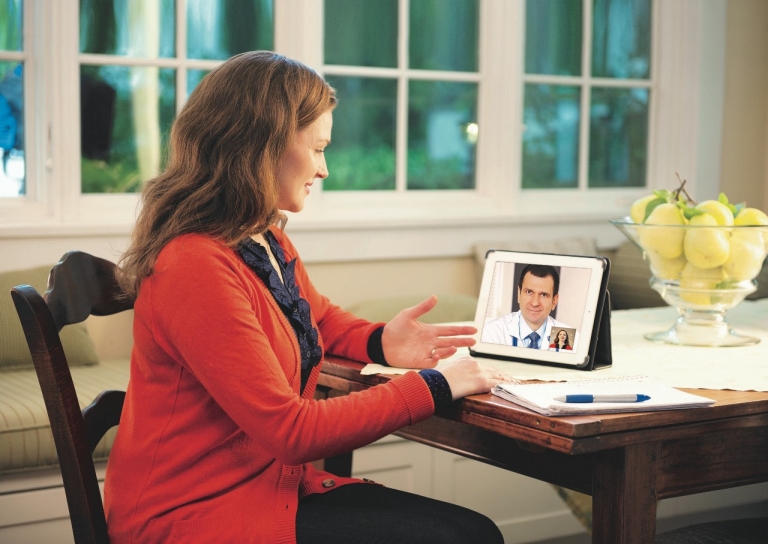
As the annual open enrollment season for health benefits gets underway, more large employers are offering services that let patients consult doctors who are in a separate location, using technology like secure video chats or remote monitoring. About three-quarters of large firms that offer health insurance now cover such “telemedicine,” a recent survey from the Kaiser Family Foundation found. That is up from 27 percent three years ago.

And half the large employers that were surveyed by the National Business Group on Health said adopting virtual solutions was their “top initiative” in 2019. The nearly 160 companies in the survey collectively employ about 13 million people.

Employers are moving to virtual care partly to make health care more convenient for workers, who can get advice for non emergency ailments without visiting a doctor’s office.

Despite employer adoption of virtual visits, they have been slow to catch on with patients. Fewer than 1 percent of enrollees in large employer health insurance plans used telemedicine services in 2016, according to a separate Kaiser analysis of medical claims data.

Mercer, a large employee benefits consulting firm, also found that worker use of telemedicine remained “frustratingly low.”

“It has not quite hit the mainstream yet,” said Mei Wa Kwong, executive director of the Center for Connected Health Policy, a nonprofit group that promotes the use of virtual technologies in health care.

Employers are also seeking ways to rein in health care costs by reducing unnecessary office and emergency room visits.

The average total annual premium paid for family health coverage is about $20,000, up 5 percent since 2017 and 20 percent over the past five years, the Kaiser foundation found. Employers pay most of that amount, while employees, on average, contribute about $5,550, Kaiser said. (The share of the family premium paid by workers has remained about 29 or 30 percent since 2010, Kaiser found.) The Kaiser survey, of about 2,200 employers, was conducted in the first seven months of 2018.

It’s hard for some people to break out of the tradition of going to a doctor’s office, Ms. Kwong said. Some people simply may not know the services are available or how they work. She said offering demonstrations of the technology might be helpful.

“Seeing is believing, for a lot of folks,” Ms. Kwong said.

Tracy Watts, a senior partner at Mercer and a specialist in health care cost management, gave an example of how “super easy” an online visit can be for a patient with, say, a rash. The patient chooses an appointment time and can upload a picture of the rash. The doctor and the patient then talk online at the appointed time, and the doctor can call in a prescription to the patient’s pharmacy — all in about 10 or 15 minutes.

For now, employer adoption of virtual medicine is on the upswing. But that may change. Some studies suggest virtual visits may increase costs by spurring patients to seek treatment for minor ailments that wouldn’t otherwise have prompted them to see a doctor.

Here are some questions and answers about virtual health care:

Is there a fee for consulting a doctor online?

Fees or co-payments depend on the details of your insurance plan.

Some employers offer virtual visits through a health plan, while others contract with separate companies to offer the service. While some providers charge people without health coverage about $70 per virtual visit, the cost can be $40 or less — or even free — for people with workplace health insurance. Some health plans may offer virtual visits with no or lower fees to encourage workers to use them, the Kaiser study found.

Mercer has found that lower fees are linked to higher use of virtual visits. Among employers who reported relatively high rates of telemedicine use, the typical co-payment was $15. Employers with below-average use had a typical fee of $30.

Whether a virtual visit costs a patient more than an in-person visit depends, again, on your insurance. The average co-payment for a primary care office visit is $25, according to the Kaiser foundation. But the cost for someone with certain health plans — like high deductible plans, which have a different payment structure — may be much higher.

How can I help a virtual visit go smoothly?

Online visits are best for routine ailments, like cold or flu symptoms, allergies, pinkeye, bronchitis or skin problems, or for follow-up visits, providers say. More severe symptoms — say, a lump that raises a cancer concern — call for an in-person visit.

Virtual visits are also particularly useful for psychological counseling and other behavioral treatments, since they tend to involve talk therapy rather than a physical exam, Ms. Kwong noted.

If you decide to try a virtual visit, it helps to familiarize yourself with the service’s rules and sign up ahead of time, so you won’t have to worry about filling out online forms when you aren’t feeling your best.

“Set up the account before you get sick,” Ms. Watts advised.

What do I need to participate in a virtual doctor visit?

You’ll need reliable internet access and an appropriate digital device. Patients can use a computer or a laptop, but most services also work with apps that can be downloaded onto a tablet or a mobile phone.

Informational Source

Why you need an emergency fund so a single hospital visit doesn’t destroy your finances

Medical care is a huge burden for folks of all ages, but for older Americans with limited income, it’s often a source of financial upheaval.

In fact, 48 percent of Americans ages 55 and older with less than $60,000 of annual income say that a single emergency room visit ranks first on their list of money-related concerns, according to the NHP Foundation.

Not only that, but older Americans are routinely putting off medical care because of money. A whopping 25 percent of those 55 and older have avoided at least one procedure due to the cost involved. And that’s problematic on multiple levels.

Save for emergencies

People land in the emergency room for a variety of reasons, and the costs involved can range from pricey to astronomical, depending on what sort of insurance you have. That said, a single medical emergency won’t necessarily derail your finances if you have the savings to pay for them.

Ideally, you should have an emergency fund with anywhere from three to six months’ worth of living expenses tucked away. If you do encounter a health issue that puts you in the hospital, you can then tap those savings to avoid racking up medical debt in the process.

Of course, building your emergency fund isn’t something you can do overnight, but if you work on consistently cutting expenses in your budget, you’ll build cash reserves eventually. To better speed up the process, consider getting a side job on top of your regular one, at least temporarily, to boost your savings if you’re starting with little to nothing.

If you’re retired already, you might look at consulting in your former field, or finding a part-time gig you can manage. You can even try turning a hobby you love into a money-making opportunity. The key is to put some cash away so that if you do end up in the emergency room, you’ll have a means of tackling that bill.

Don’t put off health issues

One reason why some people wind up in the emergency room is that they let minor health problems escalate into major ones because they don’t want to deal with the cost.

Now when you’re a low to middle earner and money is tight, it’s natural that you’d want to be frugal. But by putting off a health issue that might cost you a mere $25 copayment, you might end up in a situation where you’re on the hook for thousands of dollars in hospital bills.

As a basic example, imagine you have a bad cold that you opt not to treat because you’d rather not pay to see a doctor. If that congestion settles in your lungs and evolves into pneumonia or something more serious, you could wind up needing emergency care, especially if you’re older or have a compromised immune system.

Putting off outpatient procedures could yield similar results – namely, a lengthy hospital stay when your condition worsens and the costs associated with it climb.

That said, if you wind up in the emergency room and get stuck with a massive bill afterward, don’t assume that it can’t be negotiated. Some hospitals, in fact, have financial assistance programs in place to help patients pay for medical care they can’t otherwise afford, so make some calls and see what’s available.

Otherwise, ask the hospital where you received care if it’ll sign you up for an interest-free repayment plan. This will help keep the cost of your treatment more manageable if you’re forced to pay it off over time.

No matter your age, the last thing you want is for a single medical issue to have long-term financial repercussions. And if you’re older and are nearing or in retirement, you certainly don’t want to take on debt at a time when you might soon stop working or have already moved over to a fixed income.

The best way to avoid that fate is to have some emergency savings on hand and stay ahead of health issues before they worsen.

Informational Source

How to clean up your finances if you have more credit card debt than emergency savings

We’re told we’re supposed to save for emergencies so that we’re not forced to resort to debt when unplanned expenses come our way.

Yet 29 percent of Americans currently have a higher level of outstanding credit card debt than they do emergency cash, according to a new Bankrate report.

On the flip side, only 44 percent of U.S. households have a higher level of emergency savings than what they owe in credit card debt.

And that means a large number of Americans had better start working on cleaning up their finances – immediately.

Here’s a look at what you can do if you find yourself in such a situation:

The relationship between emergency savings and debt

A lack of emergency savings is a huge driver of debt, and for one simple reason: Most Americans max out their paychecks on a regular basis, and so when they’re forced to tackle an unanticipated expense, their only choice is to tap their savings or charge that bill on a credit card. If you don’t have savings to access, you’ll be stuck with the latter option.

Of course, that’s a problem for several reasons. First, whenever you carry a credit card balance, you automatically end up paying more for a given expense in the form of accrued interest. Not only that, but having too high a credit card balance can hurt your credit score. That’s because credit utilization is a big factor that goes into determining that number, and if you find yourself carrying a balance that exceeds 30 percent of your total available credit, your score can take a tumble. Once that happens, it can become even more costly to borrow money again. Talk about an unhealthy cycle.

Getting your priorities straight

If you’re in a situation in which your outstanding credit card debt exceeds what you have in your emergency fund, you might assume that your first focus should be on paying down your balance. In reality, however, you’re better off building some cash reserves and then eliminating that debt.

Here’s why: The longer you go without emergency savings, the greater your risk of racking up even more debt to add to your existing load. Furthermore, if you max out your credit limit and encounter a need for money, you might not even have the option to borrow what you need. On the other hand, if you have some money in the bank, you’ll be better equipped to handle a new emergency so that you don’t dig yourself further into a hole.

How much money should your emergency fund contain? Ideally, enough cash to cover three to six months’ worth of living expenses. The logic is that the sum you sock away should be able to not only pay for a major expense, like a home repair or medical bill, but also get you through a period of unemployment in the event that you lose your job.

If you’re starting with nothing in the bank, you’re not going to accumulate several months’ worth of living costs overnight. But what you can do is start immediately cutting back on expenses to save small amounts of cash here and there. Adding even $30 a week to savings is better than doing nothing.

On a more long-term basis, you’ll need to rethink your lifestyle. That could mean downsizing to a smaller home to save on rent, giving up a car you can live without, or spending less on restaurants and leisure until you’re in a healthier place financially. At the same time, you might look into getting a side hustle and using your earnings to boost your savings.

No matter what steps you take to build an emergency fund, make it a priority. Once that’s done, maintain the same habits to chip away at your outstanding debt until it’s gone. With any luck, having that safety net will prevent you from whipping out a credit card the next time an unexpected bill hits you out of the blue.

Informational Source

How to Get the Most From a Health Savings Account

Choosing a health savings account can be daunting, especially for people funding one for the first time. But some comparison shopping can help minimize fees and maximize savings, researchers say.

Providers of health savings accounts are generally doing a better job of disclosing details like fees and investment options, said Leo Acheson, associate director of multiasset and alternative strategies at the financial research firm Morningstar. But, he added, “there’s still some room for improvement.”

While updating an analysis of 10 big providers of the accounts, he said, Morningstar found that just four made all details — like fees charged — available on their websites.

A health savings account, or H.S.A. — available when paired with a specific type of high-deductible health insurance plan — offers triple tax benefits. You can contribute to an H.S.A. through paycheck deductions, reducing your taxable income; interest or investment gains are tax free; and withdrawals aren’t taxed, either, as long as you spend the money on eligible items or treatment. (If you don’t have health coverage through your employer, you can make tax-deductible contributions on your own to an H.S.A., as long you have a compatible health plan.)

Money in the accounts can be used for current health and medical expenses, or invested for care in the future. According to Fidelity Investments, a couple who are 65 years old and retiring in 2018 may need about $280,000 to cover health costs in retirement, and funding an H.S.A. can help with that burden.

But most H.S.A. holders don’t appear to be saving for the long term, according to findings from the Employee Benefit Research Institute, which analyzed a database of about six million accounts. Most account holders, the institute reported in October, appear to be using H.S.A.s as “specialized checking accounts,” not investment accounts.

People generally use the money to cover current costs, like deductibles and co-payments, rather than contributing as much as possible and investing for the future. Over all, two-thirds of account holders withdrew funds — an average of $1,725 — in 2017. Just 5 percent of account holders had investments other than cash.

That may be because most people simply can’t afford to pay for health care out of pocket and need the cash in the accounts for medical bills, said Paul Fronstin, director of the institute’s health research and education program. Or, he said, it could be that people still think of H.S.A.s as flexible health spending accounts, a different sort of workplace account with fewer perks. Unlike those accounts, H.S.A.s are portable, so you can take yours with you if you change jobs.

Over time, however, H.S.A. holders appear to become more comfortable with investing. In 2017, for instance, 10 percent of accounts that had been opened a decade earlier had investments other than cash, compared with just 2 percent of those opened in 2017, the institute found.

“It takes time to learn how these things work,” Mr. Fronstin said.

Whether you are using your H.S.A. for saving or for investing, it’s wise to compare fees and other features offered by different accounts, Mr. Acheson said.

If you have health insurance through your employer, your H.S.A. account is usually chosen for you, and your employer probably pays any monthly maintenance fee. But if you’re buying insurance on your own — or if you don’t like the investment options available in the account your employer offers — you can choose another account provider. Mr. Acheson suggests keeping your company’s H.S.A. to receive any employer contributions, then transferring the money periodically to the second H.S.A.

Morningstar recently rated 10 large account providers available to individuals, based on whether the account is mainly for spending, or for investing.

Spenders should look for H.S.A.s that offer checking accounts with no monthly maintenance fees, reasonable interest on deposits and Federal Deposit Insurance Corporation insurance, Mr. Acheson said.

Investors should also look for low fees, whether on “passive” index fund investments or actively managed funds, and no threshold on investments or a low one. (Some accounts require a minimum balance — often $1,000 to $2,000 — to be maintained in the checking account before money can be invested.)

Morningstar ranked the H.S.A. Authority, offering accounts through Old National Bank in Indiana, as the best for both spenders and investors.

Fifth Third Bank’s H.S.A. is “compelling” for spenders, the report found, if they are able to keep an average of at least $4,000 in their checking account. The bank paid a somewhat higher interest rate on deposits, and if that $4,000 balance was maintained, the bank waived its monthly fee.

Accounts from Further, an account administrator formerly known as SelectAccount, and Bank of America were deemed “solid” choices for investors.

(The analysis didn’t include H.S.A.s from Fidelity because the company didn’t begin offering the accounts to individuals outside employer plans until Nov. 15, after the report was completed.)

Eric Remjeske, president of the H.S.A. research firm Devenir, said that it made sense to evaluate the costs of a plan, but that consumers should also consider what they were getting for the extra fees. Some higher-fee accounts, for instance, may offer more services, like the availability of “robo” advisers to help with investment selections.

Devenir offers HSAsearch.com, a tool that includes more than 500 accounts, to help consumers compare H.S.A.s.

Here are some questions and answers about health savings accounts:

How do I know if my health plan is compatible with an H.S.A.?

Most plans that qualify to have a health savings account will be labeled “H.S.A. eligible.” If you’re not sure, ask the insurance company or your employer. For 2018, criteria include a deductible of at least $1,350 for an individual and $2,700 for a family. (Minimum deductibles won’t change in 2019, the Internal Revenue Service has said.)

What can I buy with my H.S.A.?

You can spend the money on a wide variety of “qualified” expenses, including doctor visits, eyeglasses, fertility treatment and drug addiction treatment. For a complete list, see I.R.S. Publication 502. Be sure to keep receipts, or benefit statements from your insurer, in case you have to document your spending, Mr. Fronstin said. If you spend the money on noneligible items, the withdrawal is taxed as income, plus a 20 percent penalty. (After you turn 65, the penalty goes away, and you’ll pay just income taxes on nonqualified withdrawals.)

Do you want to more information about the virtual doctor and Health Saving Account management then please contact us in the comment section.

Informational Source

Hearing Loss Threatens Mind, Life and Limb

Poor hearing is not just an annoying inconvenience.

The earsplitting sound of ambulance sirens in New York City is surely hastening the day when I and many others repeatedly subjected to such noise will be forced to get hearing aids. I just hope this doesn’t happen before 2021 or so when these devices become available over-the-counter and are far less expensive and perhaps more effective than they are now.

Currently, hearing aids and accompanying services are typically not covered by medical insurance, Medicare included. Such coverage was specifically excluded when the Medicare law was passed in 1965, a time when hearing loss was not generally recognized as a medical issue and hearing aids were not very effective, said Dr. Frank R. Lin, who heads the Cochlear Center for Hearing and Public Health at the Johns Hopkins Bloomberg School of Public Health.

Now a growing body of research by his colleagues and others is linking untreated hearing loss to several costly ills, and the time has come for hearing protection and treatment of hearing loss to be taken much more seriously.

Not only is poor hearing annoying and inconvenient for millions of people, especially the elderly. It is also an unmistakable health hazard, threatening mind, life and limb, that could cost Medicare much more than it would to provide hearing aids and services for every older American with hearing loss.

Currently, 38.2 million Americans aged 12 or older have hearing loss, a problem that becomes increasingly common and more severe with age. More than half of people in their 70s and more than 80 percent in their 80s have mild to moderate hearing loss or worse, according to tests done by the National Health and Nutrition Examination Survey between 2001 and 2010.

Two huge new studies have demonstrated a clear association between untreated hearing loss and an increased risk of dementia, depression, falls and even cardiovascular diseases. In a significant number of people, the studies indicate, uncorrected hearing loss itself appears to be the cause of the associated health problem.

In one of the studies that covered 154,414 adults 50 and older who had health insurance claims, researchers at Johns Hopkins found that untreated hearing loss increased the risk of developing dementia by 50 percent and depression by 40 percent in just five years when compared to those without hearing loss.

An analysis of the voluminous data by Nicholas S. Reed and colleagues linked untreated hearing loss to more and longer hospitalizations and readmissions and more visits to an emergency room.

Within 10 years, untreated hearing loss accounted for 3.2 percent of all cases of dementia, 3.57 percent of people significantly injured in a fall, and 6.88 percent of those seeking treatment for depression. The percentages may seem small, but given how common these conditions are, they affect a very large number of individuals, resulting in great personal, financial and societal costs.

About 85 percent of those with hearing loss are untreated, Dr. Lin said. For older adults alone, this increased health care costs by 46 percent over a period of 10 years, compared with costs incurred by those without hearing loss, the authors reported in November in JAMA Otolaryngology Head and Neck Surgery.

One of the authors, Jennifer A. Deal, an epidemiologist and gerontologist at the Johns Hopkins Bloomberg School of Public Health, said that while “hearing loss itself is not very expensive, the effect of hearing loss on everything else is expensive.”

Unfortunately, people tend to wait much too long to get their hearing tested and treated with hearing aids, and the longer they wait, the harder it is to treat hearing loss, Dr. Lin told me.

Age-related hearing loss comes on really slowly, making it harder for people to know when to take it seriously, he said. He cited two good clues to when to get your hearing tested: Family members or close friends say you should, or you notice that you often mishear or don’t know what others are saying.

But even when people are tested and spend thousands of dollars to purchase needed hearing aids, the devices often sit in a drawer. People may complain that the sound quality is poor, too static-y or otherwise annoying, and that the aids merely amplify all sound, making it still hard to hear in a noisy environment. All aids are not created equal, Dr. Lin said, and even expensive, properly fitted aids can require multiple adjustments. Some people give up too readily to get the best results.

“Unrealistic expectations are a big part of this problem,” Dr. Lin said. “It’s not like putting on a pair of glasses that immediately enables you to see clearly,” he said. “Hearing loss is not fixed as easily as eyesight. The brain needs time — a good month or two — to adjust to hearing aids. And the earlier hearing loss is treated, the easier it is for the brain to adapt.”

The new studies give ample cause for taking hearing loss seriously. Consider, for example, the link to dementia. People who can’t hear well often become socially isolated and deprived of stimuli that keep the brain cognitively engaged. As input lessens, so does brain function.

“Hearing loss is not a volume issue,” Dr. Deal said. “It’s a quality-of-sound issue. Certain parts of words drop out and speech sounds like mumbling. A garbled message is sent to the brain that it has to work harder to decode.”

In addition, when information is not heard clearly, it impedes memory. “A good clear auditory signal is more easily remembered,” Dr. Deal said. “The key to memory is paying attention. The brain can’t stay focused on the words when it is working overtime to decode the signal.”

With respect to falls, she said, hearing loss often goes hand-in-hand with balance issues. “Even when we don’t realize it, we’re using our ears to position ourselves in space,” she explained. Also, when people can’t hear well, they are less aware of sounds around them. They may fall when startled by someone or something that seems to come silently from behind.

Dr. Deal said she and her co-authors were surprised to find a link between poor hearing and cardiovascular disease. “It could be that vascular disease is common to both,” she said, but added that social isolation and stress resulting from hearing loss are also likely to play a role

There’s good news for New York City residents, among whom noise pollution is the leading municipal complaint. By 2011, all of the more than 10,000 police department vehicles were switched to lower-frequency “rumbler” sirens, which are 10 decibels quieter, and the fire department has begun using them too.

The next step is to get less shrill sirens for the more than 2.5 million ambulance calls in the city every year. The Mount Sinai Health System is testing the two-tone sirens that make an “ee-aw” sound commonly heard in Europe, and the Greater New York Hospital Association has begun testing rumbler sirens for its ambulances.

Informational Source

The Impact of No Health Insurance

WHEN it looked like their 6-year-old son was developing a severe cold last month, an East Hampton couple knew that it would be a good idea to keep him home and visit a pediatrician. They did neither.

One parent would have to stay home with the youngster, which would mean a loss of pay. There was another reason why they avoided an office visit and the antibiotics the physician would likely prescribe: the family had no health insurance.

People on Long Island are increasingly gambling with illness. The relatively high rate of unemployment means that fewer people are covered by health insurance, and some employers, faced with rapidly rising insurance costs, are scaling down coverage or insisting that their workers pay a larger part of the premiums.

The couple with the sick son had relatives nearby who could presumably help them with money. But the parents chose not to ask, because they were reluctant to reveal that they were uninsured.

Although they felt badly about exposing their son’s classmates to a contagious cold, the parents continued to send him to school and hoped that he would improve. But he did not.

In a few days, the boy suffered from bronchitis and an ear infection, and his parents had to contend with medical bills amounting to three times as much as they would have originally spent. They had lost the gamble.

On the South Fork, the problem is particularly acute, and a forum on options for noncovered people, with the Amagansett P.T.A., the South Fork Community Health Initiative and the East Hampton Rotary Club, will be held on Wednesday at 7:15 P.M. in the Amagansett School on Montauk Highway.

The impetus for the forum stems from a talk by Fran Donovan, a social worker affiliated with several schools, at December meeting of the P.T.A. According to Ms. Donovan, up to 50 percent of the Amagansett schoolchildren are from families without health insurance, a percentage she believes also applies to surrounding communities. Because of the sluggish economy, she said, the number of uninsured families is expected to increase.

‘Situation Has Gotten Worse’

A major reason for the problem, Ms. Donovan contends, is that, when compared with other regions, the South Fork has proportionately more people who are self-employed, work part-time or have service jobs.

“In the last couple of years, the situation has gotten worse,” Ms. Donovan said in an interview. “Jobs in the tourism industry rarely carry health insurance. As the farming and fishing industries have waned, those families have had to choose between paying for insurance or paying their mortgages.

“And as the economy has slumped, some companies have either tightened eligibility or have dropped coverage for their workers. It’s not an exaggeration that if you don’t work for the town or the schools, you don’t have coverage.”

Ms. Donovan said she based her estimate on the children, parents and teachers to whom she talked, “but I’m sure there are many others in the same situation we don’t know about.” Rise in Absenteeism

Ms. Donovan said the schools should address the problem because it affected children’s health and absenteeism. When a child is sick, she said, an uninsured family is less likely to seek early medical attention. That not only increases the risk of a child’s becoming seriously ill, she noted, but also infects classmates if the child continues to attend school.

“This winter in schools in this area we’re seeing a high incidence of pneumonia and tuberculosis,” Ms. Donovan said. “These children are sent to school in the early stages, when they’re the most contagious. Some parents are embarrassed.

“I had one woman tell me she hoped her parents didn’t find out she had no health insurance. It used to be you would never go without medical coverage, at least for your children. But now some people simply don’t have a choice. It’s pay premiums or buy food.”

The president of the P.T.A., Emily Nixon, and Ronnie Todaro of the Community Health Initiative have been working on the problem and sharing information with neighboring P.T.A.’s, church groups, Chambers of Commerce and community organizations in the Town of East Hampton. What If the Child Is Sick?

“Most definitely, there is a negative impact on the children,” Mrs. Nixon said. “Without insurance, it’s hard enough to keep up with the routine needs of a well child. But what if she gets sick?

“Even a simple cold can develop into a full-blown chest illness. That child misses valuable school time, feels miserable and passes it on to her friends and family. Once a chain reaction starts, you just hope it doesn’t get too bad.”

Although Mrs. Nixon stressed that a P.T.A. could not provide insurance, Amagansett’s has found plans that individual families or groups of families could use at little or no cost.

One is Child Health Plus, underwritten by the state. Depending on family income, the plan provides basic physicians’ care for children under 13 at no cost or $25 a year.

Another plan is Kid Care, through Empire Blue Cross and Blue Shield. It has no income restrictions and provides physicians’ care for children under 18 for $30 a month and hospitalization for an additional $33 a month.

“Health insurance is an awful dilemma right now for families everywhere, but it seems to be approaching a crisis point on the East End,” Ms. Todaro said. “Elsewhere people can get involved in programs like H.I.P. But for someone out here the nearest participating physician is 50 miles away. So if you can’t afford regular insurance premiums, which seem to jump almost every month, you’re stuck.”

Ms. Todaro said the forum would try to “get the ball rolling” to finding ways for families to buy insurance, at least for their children. Representatives of insurers, Planned Parenthood, business groups and the Suffolk Coalition for National Health Insurance are expected to offer information at the meeting.. Chamber of Commerce Program

Also to be discussed are how other regions have addressed the problem. In Hudson in Columbia County, the Chamber of Commerce provides medical coverage for self-employed residents. Another is Mutual of Omaha Medflex plan, which can provide relatively low-cost major-medical coverage to groups of 20 or more families.

“More and more people are without a safety net when it comes to medical problems, and it’s especially scary when you’re talking about children,” Ms. Donovan said. “A lot of parents are just praying there isn’t a playground accident, appendicitis or something else. Not only would the child suffer, but a family without insurance would get hit with medical bills that could wipe them out.”

Informational Source

New Flood Insurance Rule from Bank Regulators a Win for Consumers, Agents and Brokers

If Implemented Wisely, Flood-Exposed Properties Could Benefit from Expanded Market

While lawmakers continue their struggle to agree on the long-term reauthorization of the financially burdensome National Flood Insurance Program, federal lending regulators have concluded their own six-year struggle to issue a final rule implementing the mandatory acceptance by lenders of private flood insurance as required by the last long-term re authorization of the NFIP-the Bigger-Waters amendment. This could prove to be good news for consumers and the agents and brokers who introduce them to private flood insurance options.

The new private flood insurance rule will become effective on July 1 but is expected to be adhered to by lenders and insurers in short order as a practical matter. The mandatory acceptance provision in the new rule proclaims a breakthrough for flood insurance buyers and taxpayers, as it leaves no room for a few uninformed lenders to impede the growth of private flood insurance. If lending regulators implement the rule wisely, as it appears they will, owners of flood-exposed homes and businesses, mortgage lenders and taxpayers will benefit.

Where We Have Been

The Biggert-Waters Flood Insurance Reform Act of 2012 was designed in part to encourage the sale of private flood insurance by forcing federal lending regulators to stop years of unsanctioned actions that denied some borrowers access to better coverage and lower premiums through the private flood insurance market. Unfortunately, after being instructed by Congress to encourage growth of the private flood insurance market, these well-intended lending regulators proposed a rule in 2016 that was universally criticized by insurers, lenders and state regulators as overly burdensome and practically impossible to administer.

The proposed rule would have required lenders to warrant in writing that the subject policy agreed with the Biggert-Waters definition of private flood insurance. That definition was broadly recognized as being terribly flawed. The unpopular proposed rule was criticized as being unnecessary and redundant, as more qualified state regulators already assure that the intent of the Biggert-Waters definition is accomplished. Most crucially, the proposed rule added unnecessary cost to a lender’s acceptance of a private flood insurance policy when compared to acceptance of an NFIP policy.

For these reasons–along with the fact that the proposed rule ran counter to existing lender and regulatory norms relating to acceptance of all other forms of property insurance such as homeowners, windstorm and earthquake–the inevitable and ironic result of the proposed rule would have been the essential elimination of private flood insurance from the market. This is the exact opposite of what Congress intended.

Where We Are Going

In a triumph of common sense, federal lending regulators have included a “mandatory acceptance” provision in the final rule implementing Biggert-Waters private flood insurance provisions that requires a lender to accept private flood insurance policies containing certain characteristics and/or a specified statement demonstrating compliance. This sensible provision allows lenders to process most private flood insurance policies in the same way other types of property insurance such as homeowners, windstorm and earthquake policies are processed.

Unfortunately, as mentioned above, the final rule also contains a provision that deals with lenders’ discretionary acceptance of private flood insurance that may prove problematic for some agents and brokers and, most importantly, their flood insurance clients.

The McCarran-Ferguson Act clearly conveys regulation of private insurance to the states. The courts have ruled that very specific instruction from Congress is necessary for a federal regulator to preempt state insurance regulation. No such specific instruction relative to discretionary acceptance of flood insurance exists. So, it seems that the discretionary acceptance portion of the final rule is a solution in search of a problem.

The mandatory acceptance provision in the new rule proclaims a breakthrough for flood insurance buyers and taxpayers, as it leaves no room for a few uninformed lenders to impede the growth of private flood insurance.

Lenders have always had, and continue to have, the right of discretionary acceptance of private flood insurance policies on the same basis as they accept all other types of property insurance. Considering that Biggert-Waters only addresses the issue of what lenders must accept, not what they may discretionarily accept, the discretionary portion of the rule serves no real purpose.

If implemented wisely, the discretionary acceptance provision will have no detrimental impact on the flood insurance market. If imprudently implemented, it has the potential to inhibit the use of low-limit flood insurance endorsements, parametric flood insurance for

communities and individuals and manuscript insurance policies, and may well lead to other unintended consequences.

What’s Next

As lending regulators take a more enlightened view, one might hope for similar thinking to be articulated by the NFIP, which continues to be under a Congressional requirement to cover the nation’s flood insurance needs through participation of the private market “to the maximum extent practicable.”

NFIP Administrator David Maurstad is well qualified, experienced and strongminded — just the kind of person who might be able to overcome regressive elements within the NFIP that seem bent on inhibiting consumer access to private flood insurance. Roadblocks such as the “continuous coverage” rule, which penalizes a subset of consumers who wish to return to the NFIP from the private market, and the recent attempt to eviscerate a “midterm” cancellation provision for insureds wishing to cancel NFIP policies replaced by private flood, must end.

An NFIP that fights to assure access to more private market choices would save taxpayers billions of dollars.

Agents and brokers should understand that it can flood almost anywhere, and best practices demand that they offer their clients solutions responsive to this risk. Very few Americans are buying flood insurance, and if more private, as well as NFIP coverage is quoted, outcomes will improve for everyone. However, this can only happen when insurance professionals begin thinking about flood as a peril to be quoted on every property policy as a matter of standard practice, and when all attempts to inhibit the availability of private flood insurance cease.

Informational Source

4 financial secrets rich people don’t want you to know

At times, rich people seem to inhabit another world, one apart from the financial concerns of the hard-working middle class.

Many speculate there’s a secret to joining the ranks of the elite, often involving an inheritance from a wealthy relative or a multibillion-dollar idea. But the truth is, it usually comes down to drive and smart financial planning.

These aren’t exactly secrets, but they’re often what separate the wealthy from the wishful thinkers, and they’re often overlooked.

Here are four of the “secrets” that can help any worker grow their net worth

1. Your money should be working for you, not the other way around

Conventional wisdom says you must get a job and work hard to build wealth. There’s truth in that, but if your only means of income involves trading time for money, then your income potential is limited by the number of hours in a work week. The wealthy know that making money doesn’t always require hard work, and they take every opportunity to generate new sources of passive income.

Passive income can come from several sources, including rental properties, royalties on creative works, or investing. You don’t need a lot of money to start investing, but it’s important to keep your portfolio diversified so you don’t expose yourself to too much risk. Don’t try to time the market by selling when you think it’s at a peak or buying when you think it’s at rock-bottom. That approach is almost guaranteed to lose you money. You’re better off buying quality investments and holding them for the long term.

It’s important to understand the costs associated with all of your passive income streams. For example, if you run several rental properties, there may be maintenance costs that eat into your profit. Similarly, when you invest, there may be costs associated with your investment products, like fees for each trade or expense ratios on mutual funds. Try to keep these low to help maximize your profits. Index funds are a great choice for investors who want a cheap way to diversify their portfolio and earn substantial returns.

22. Keeping up with the Joneses will cost you every time

Most people think the rich live lavish lifestyles, and while some of them do, many of the wealthy got where they are by living frugally and investing a big portion of their earnings. Oracle of Omaha Warren Buffett still lives in the home he bought in 1958 for $31,500, and Amazon CEO Jeff Bezos – currently the richest man in the world – still drove his old Honda Accord for years after becoming a billionaire. It can be difficult to avoid the temptation to spend beyond your means, but it’s crucial that you resist. Otherwise, you could find yourself in debt, which will hamper your ability to save for the future even more.

Set a budget for yourself, if you haven’t already, and strive to set aside at least 20 percent of your income for savings whenever possible. When you get a raise, raise your monthly savings amount before doing anything else. And if you’re already in debt, take steps to pay it down. A balance transfer card is a nice option for tackling credit card debt. You could also try a personal loan.

3. Time is your most valuable currency

When it comes to investing, your most valuable asset is time. Money you contribute earlier in your life is more valuable than money you contribute later, thanks to compound interest. At first, you’ll just earn interest on your initial contributions, but over time, you’ll also begin to earn interest on your interest, helping your balance grow much faster. Consider this: If you invested $10,000 when you were 25, it would be worth over $217,000 by the time you turned 65, assuming an 8 percent annual rate of return. But if you waited 10 years to invest that $10,000, it would only be worth $101,000 in the end.

Even if you can’t afford to invest much money today, your small contributions could still grow into a large sum over time, so you’re better off starting now rather than waiting until later. Automate your investments whenever possible so that you don’t have to worry about remembering to set aside the money on your own every month.

4. It’s best not to go it alone

Wealthy people don’t always know the most about finances or investing, but they do understand the value of expert advice from a professional. While some people might balk at the cost of hiring a financial adviser to manage their money, the wealthy understand that, with an adviser’s help, their money could grow faster than it would if they were managing it on their own.

A financial adviser may be able to suggest investments and strategies that you hadn’t considered to achieve your financial goals more quickly. It’s crucial that you choose a fee-only adviser, though. Unlike fee-based advisers, fee-only advisers don’t earn commissions on the investment products they sell to you, so you don’t have to worry about any potential conflicts of interest.

Wealth rarely comes overnight, but by being responsible with your money, seeking out new and greater sources of income, and asking for help when you need it, you can steadily grow your net worth over time.

Informational Source

Social Security, IRA and tax mistakes to avoid when planning retirement

Retirement planning mistakes — especially the ones you can’t correct — can be costly. But some are correctable. Here are three that can be fixed, experts say.

1. Using the wrong bucket

Did you start 2019 without thinking how best to save for retirement? Are you saving money in the right buckets – taxable, tax-free and tax-deferred? Or are you focused solely on reducing your taxable income today?

After people file their 2018 tax returns, many will try to save on taxes at today’s tax rates, says Jeannette Bajalia, the founder of Woman’s Worth, a financial services firm based in Jacksonville, Florida, and author of several books including “Planning a Purposeful Life.”

Some individuals who are age 50 or over at the end of the calendar year might even make so-called “catch-up contributions” to their tax-deferred accounts instead of doing what might be in their best interest. And that would be to put money away in taxable or Roth accounts, says Bajalia.

A Roth account allows the owner to withdraw money tax-free. And a taxable account might allow the account owner to withdraw money at favorable tax rates for capital gains and dividend income.

For 2019, the annual IRA contribution limit is $6,000, or $7,000 if you’re age 50 or older. The annual contribution limit for a 401(k) and other employee plans is $19,000, or $25,000 if you’re age 50 and over.

“Sometimes people are in a hurry to save taxes rather than thinking that the real tax savings (could come) later in life when taxes may be significantly higher,” says Bajalia. “Taxes are on sale today so let’s take advantage of a favorable tax code,” she says.

For his part, Timothy Bogert, a financial consultant with America Group Retirement Strategy Centers, says it would be a mistake for people 50 or older not to make annual catch-up contributions to their 401(k) and/or IRA.

Bogert also says it’s an error not to fully fund your health savings account or HSA if you’re able. Contributions go into and out of HSAs tax-free – if used for qualified medical expenses  — and money in the HSA grows tax-free.

Participants with “self-only” health coverage can contribute $3,450 to their HSA in 2019, while those with family coverage can contribute $6,900. The catch-up contribution is $1,000 for those age 55 or older.

2. Not talking to your financial adviser

If you plan on retiring this year and aim to claim Social Security, now would be a good time to review your plans with a qualified and competent professional.

“Not having an informed discussion with your adviser and CPA on the benefits of deferring Social Security to a later date and using IRA assets for retirement income instead “is a huge mistake that can be avoided,” says Bajalia.

Social Security retirement benefits are increased by a certain percentage (depending on date of birth) if you delay your retirement beyond full retirement age.

Withdrawing money in your IRA now could also reduce future tax bills on your required minimum distributions (RMDs) that start at age 70½.

Such distributions are taxed as ordinary income now and later. But RMDs from large IRAs often result in taxpayers age 70 ½ and older being pushed into a higher tax bracket. Reducing the amount of money in your IRA before age 70 1/2 could result in a lower tax bill later.

“Many retirees are retiring with the majority of their savings in tax-deferred assets which is a ticking time bomb,” says Bajalia.

3. Putting off tax planning

Early in the year, once you’ve filed your tax return, shift your focus to tax planning.

According to Robert Keebler, co-author of “The Top 40 Tax Planning Opportunities for 2019”, the first step in tax planning is to estimate the amount of taxable income over a five to 15-year horizon.

Once the amount of taxable income is estimated, planning to avoid the higher tax brackets can begin. To be sure, Keebler says, there are many different specific tax planning strategies that can be used depending on the situation. Here are two relatively easy ones:

Harvesting. This is the practice of selling investments at a loss when you are in high-income years and selling investments that produce capital gains in low-income years. Both practices can lower your tax bill. For instance, you can use a capital loss as an offset to ordinary income, up to $3,000 per year. If you have more than $3,000, it will be carried forward to future tax years. And selling investments that produce capital gains in a low-income year could mean the difference between paying 15 percent tax instead of 20 percent or 0 percent instead of 15 percent.

Traditional IRAs and Roth IRAs.  Contribute, assuming you qualify, to a traditional IRA in high-income years and a Roth IRA in low-income years. The first practice will enable you to reduce your adjusted gross income now and the second practice will help you reduce your tax bill later. Withdrawals from a Roth IRA are tax-free while withdrawals from a traditional IRA are taxed as ordinary income.

“Thinking about tax-efficient income planning is essential at the beginning of the year because once decisions are made with regard to what types of assets will be used for income, these typically can’t be ‘undone,’” says Bajalia.

Do you want to more information about the chip guidelines then please contact us in the comment section.

Informational Source

Design a site like this with WordPress.com
Get started